The Business of Bobbysoxers: Cultural Production in 1940s Frank Sinatra Fandom
Oxford University Press (2024)
The Business of Bobbysoxers reconsiders the story of American popular music, celebrity following, and fan behavior during World War II through close examination of “bobbysoxers.” Preserved in popular memory as hysterical teen girl devotees of Frank Sinatra clad in bobby socks and saddle shoes, these girls were accused of displaying inappropriate behavior and priorities in their obsessive pursuit of a crooning celebrity at a time of international crisis. This study peels back the stereotypes of girlhood idol adoration by documenting the intimate practices of wartime Sinatra fan clubs, revealing a new side of this familiar story in American history through the perspective of the bobbysoxer.
In World War II America, fan clubs and organizations like Teen Canteens offered a haven for teenage girls to celebrate their enjoyment of popular culture while cultivating relationships with each other through media icons and the entertainment industry. Many of these organizations attempted to encourage diverse memberships, influenced in part by Frank Sinatra’s public work on racial and religious tolerance, and by Sinatra’s own identity as an Italian American. Away from the critical public eye, these communities offered girls a place to safely explore and discuss issues including civil rights, politics, the war, patriotism, internationalism, and professional development in the context of their shared Sinatra fandom. With these broader social and political complexities in mind, The Business of Bobbysoxers shines a light on musical fan communities that provided teenage girls with peer groups at a critical moment of personal and historical change, allowing them to creatively express their desires and imagine their futures as American women together.
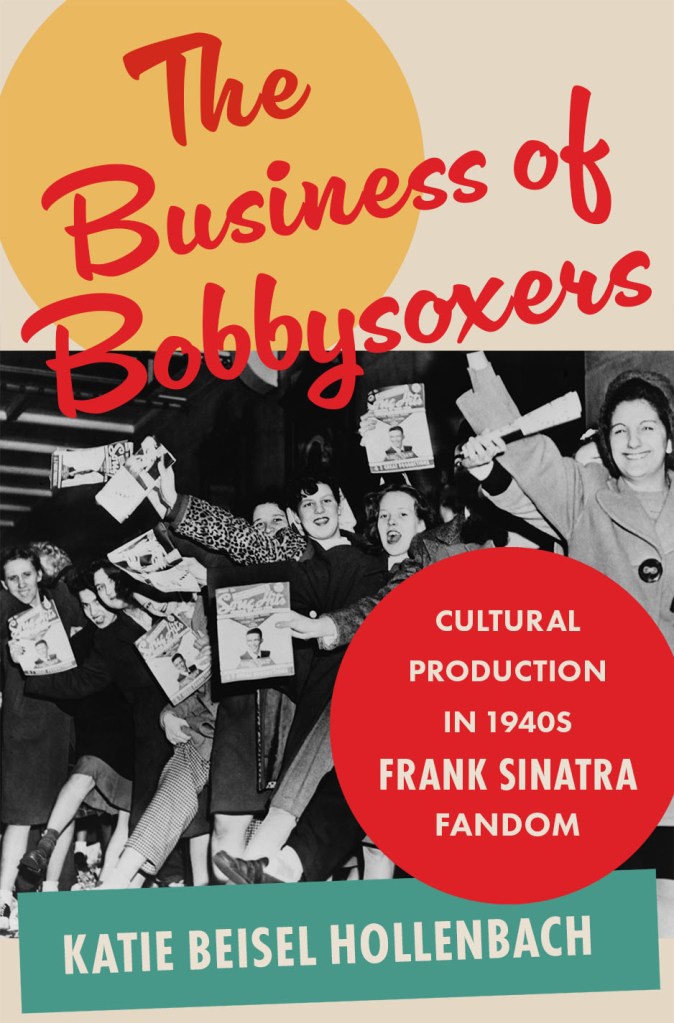
“Katie Beisel Hollenbach vividly demonstrates how much bobbysoxers responded directly to perceptions that mass adulation was uncivilized, irresponsible, and unladylike. ‘Organized fandom’ was no contradiction in terms for Sinatra’s engaged and professional army of followers. His fan clubs not only displayed a strong sense of generational ownership; they showed a real ethos of civic duty in wartime America. The past of music fandom remains something of an undiscovered continent. Analyzing a key moment and phenomenon, Hollenbach’s fascinating new book is a real landmark. A stellar study – we need more work as good as this.” — Mark Duffett, Associate Professor of Media and Cultural Studies, University of Chester

